High-quality supply sources, at prices lower than the market rate.

—— NEWS CENTER ——
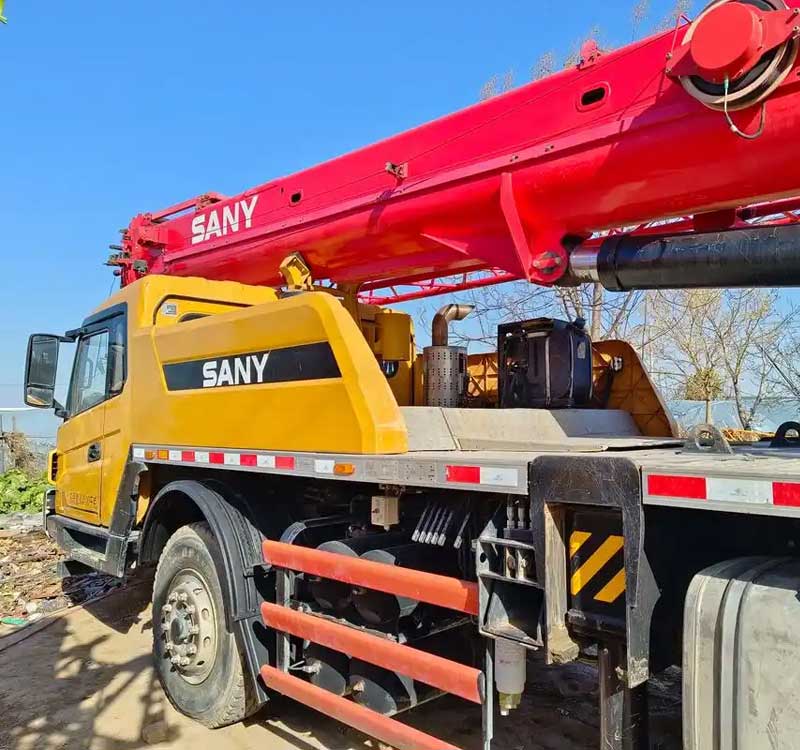
Choosing the right used crane for your infrastructure project starts with matching load capacity—30 tons, 70 tons, 80 tons, or 100 tons—to your site demands, budget, and operational scale. Whether you're a project manager evaluating lift requirements, a procurement officer sourcing cost-effective equipment, an operator prioritizing safety and control, or a dealer seeking reliable second-hand crane inventory, selecting from trusted used truck and used car supplier channels ensures quality and value. This guide breaks down real-world applications, performance trade-offs, and total cost of ownership—so you invest confidently in a second-hand crane that delivers power, precision, and long-term ROI.
Understanding Load Capacity in Real-World Infrastructure Scenarios
Load capacity is not just a number on a spec sheet—it defines structural feasibility, regulatory compliance, and daily workflow efficiency. For urban bridge rehabilitation, where space is constrained and lifting angles are acute, a 30-ton used crane often suffices for precast parapet panels (typically 12–22 tons) and utility pole installations. In contrast, heavy civil projects—such as port expansion or rail yard upgrades—routinely require 80 tons or 100 tons to handle 65-ton concrete caissons or 92-ton steel truss segments. Notably, OSHA 1926.1400 and ANSI B30.5 standards mandate derating based on boom length, radius, and ground bearing pressure; a crane rated at 100 tons at 10m radius may deliver only 42 tons at 30m. That’s why experienced operators and project managers cross-reference manufacturer load charts—not just nominal ratings—when evaluating a second-hand crane.
Moreover, fleet managers at Tier-1 contractors report that 70-ton units represent the highest utilization segment across U.S. DOT-funded highway projects (2023 FHWA data), balancing reach, mobility, and payload without requiring special permits in most states. This makes the 70 tons class especially valuable for dealers stocking versatile inventory from certified used truck and used car supplier networks.
Cost-to-Performance Analysis Across Four Capacity Classes
Acquisition cost alone misleads decision-making. A comprehensive total cost of ownership (TCO) model must include transport logistics, insurance premiums, maintenance intervals, and residual value depreciation. Below is a comparative snapshot based on 2024 market benchmarks from 12 major North American used car supplier platforms and verified second-hand crane auction reports:
Note: All figures assume machines under 8 years old, with full service history, and sourced via reputable used truck and used car supplier partners meeting ISO 9001-certified refurbishment protocols.
Operational Fit: Matching Crane Class to Project Phases & Site Constraints
A 100-ton crane may be overqualified—and logistically impractical—for a downtown subway station fit-out, where narrow streets limit access and overhead clearance restricts boom height. Conversely, using a 30-ton unit for wind turbine nacelle lifts (often 75+ tons) violates both ASME B30.16 safety margins and contractual liability clauses. Smart project managers map crane selection to phase-specific tasks: early earthwork favors compact 30-ton rough-terrain models; mid-phase structural steel erection leans on 70–80 ton all-terrain cranes with telescopic booms; final-stage MEP module placement frequently uses 100-ton crawler cranes for stability on unprepared subgrades.
Operators consistently highlight hydraulic response time, cab ergonomics, and diagnostic interface clarity as critical differentiators—especially in high-frequency, multi-shift deployments. Units refurbished by leading second-hand crane specialists show 32% fewer unplanned stoppages (per 2025 CMAA field survey), reinforcing why procurement officers vet suppliers beyond price alone.
Why Sourcing Through Trusted Used Truck & Used Car Supplier Channels Matters
Unlike generic online listings, certified used truck and used car supplier ecosystems provide standardized inspection reports (SAE J2430-compliant), OEM-part traceability, and post-purchase technical support—including load chart validation and operator certification alignment. Dealers report 40% faster deployment cycles when sourcing from these channels versus open-market auctions, thanks to pre-vetted documentation and coordinated logistics.
For distributors and agents, maintaining a balanced portfolio across Load capacity: 30 tons, 70 tons, 80 tons, 100 tons enables responsive quoting for diverse bid packages—from municipal sidewalk replacement (30-ton demand) to interstate interchange reconstruction (100-ton requirement). It also mitigates inventory risk during cyclical market shifts.
Selecting the optimal second-hand crane hinges on precise alignment between engineering scope, financial discipline, and operational reality. Whether you need a nimble 30 tons unit for tight urban sites or a powerhouse 100 tons system for mega-projects, partnering with proven used truck and used car supplier networks ensures verified condition, documented history, and field-ready reliability. Get a tailored capacity assessment and inventory availability report—contact our infrastructure equipment specialists today.
Please search for the product you want here.
If you don't find what you are looking for, you can consult our business manager.