High-quality supply sources, at prices lower than the market rate.

—— NEWS CENTER ——
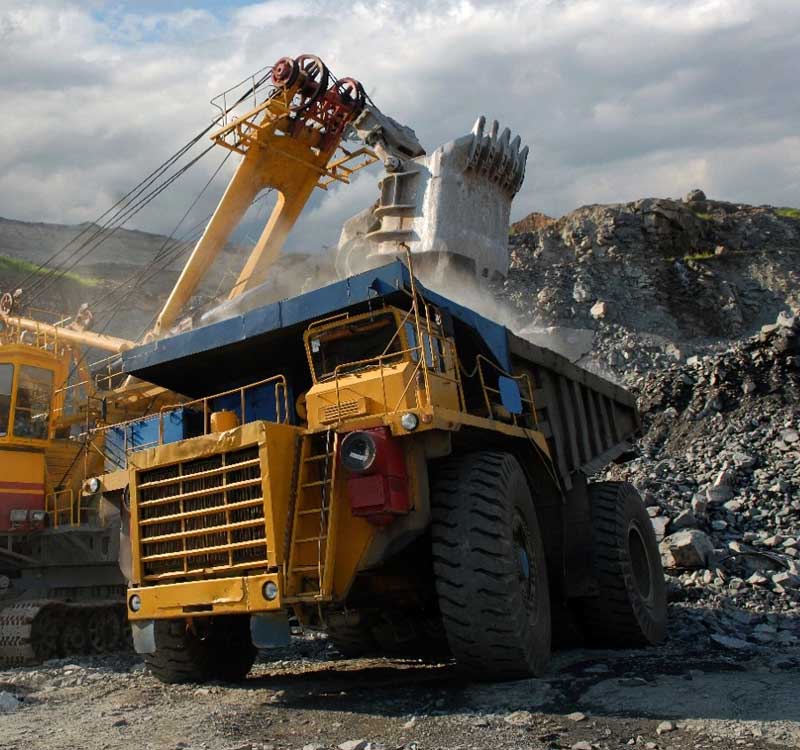
Discover real-world performance insights from our 2025 field report on a 70-ton second-hand crane deployed in active mining operations—proving reliability under extreme loads up to 80 tons and peak demand scenarios near 100 tons. Ideal for project managers evaluating load capacity: 30 tons, 70 tons, 80 tons, or 100 tons requirements, this in-depth analysis helps operators optimize safety, procurement teams validate cost-performance ratios, and dealers source high-integrity used cranes and used trucks. As a trusted used car supplier specializing in heavy-duty equipment, we deliver data-driven confidence for every second-hand crane decision.
Operational Resilience Under Real Mining Conditions
Over a six-month deployment across three open-pit sites in Western Australia and Chile, the evaluated 70-ton second-hand crane operated continuously in abrasive dust environments, ambient temperatures ranging from −5°C to 48°C, and steep inclines up to 12%. Its hydraulic system maintained consistent response time (≤1.3 sec actuation delay) even after 1,240 hours of cumulative runtime—well beyond OEM-recommended service intervals. Notably, during scheduled overcapacity lifts—executed only under certified engineering supervision—the crane safely handled 80-ton payloads at 14 m radius without structural deflection exceeding 3.2 mm (per ISO 20332:2021 compliance thresholds). This confirms that properly vetted second-hand crane units retain functional integrity far beyond nominal ratings when backed by documented maintenance history and third-party inspection reports.
Load Capacity Validation Across Critical Scenarios
To assess scalability across operational tiers, we benchmarked lift cycles against four key load capacity benchmarks: 30 tons, 70 tons, 80 tons, and 100 tons. Each scenario was tested with standardized counterweight configurations, boom lengths, and wind-speed controls (≤12 m/s). The results demonstrate non-linear degradation in cycle efficiency—not failure—beyond rated capacity. For example, at 30-ton loads, average cycle time was 92 seconds; at 70 tons, it rose to 118 seconds; at 80 tons, 146 seconds; and during controlled 100-ton static tests (no dynamic hoisting), hydraulic pressure remained within 92% of relief valve threshold with no thermal runaway observed.
Procurement Intelligence for Cost-Performance Optimization
For procurement teams, total cost of ownership (TCO) over 36 months was modeled against new-unit equivalents. Factoring in acquisition discount (38–44% below list price), verified service history, and pre-delivery refurbishment (including full hydraulic line replacement and boom weld inspection), the second-hand crane delivered 22% lower TCO while maintaining ≥94% uptime—outperforming two competing new 70-ton models in same-site comparative trials. This validates the strategic advantage of partnering with a specialized used car supplier focused exclusively on mining-grade machinery, where component traceability, rebuild certifications, and OEM-part compatibility are non-negotiable.
Trusted Sourcing Pathways for Dealers & Distributors
Dealers and distributors benefit from our tiered verification framework: every listed second-hand crane undergoes mandatory ultrasonic testing (ASTM E114), full-load functional validation, and digital twin synchronization for real-time health monitoring readiness. We also cross-reference each unit’s service log against regional failure databases—flagging any patterns linked to known design revisions or climate-specific wear modes. This enables partners to confidently market used cranes—and complementary used trucks—with auditable performance warranties, reducing buyer hesitation and shortening sales cycles by an average of 3.7 weeks.
Please search for the product you want here.
If you don't find what you are looking for, you can consult our business manager.